
(July 12, 2024)
Today's rapidly increasing traffic brings more challenges to Parking operators: more data is needed to be processed, more clients need to be serviced, and more infractions need to be detected, and it has to be done faster than ever before.
License Plate Inventory and Parking Enforcement are two key methods in Parking management that have been gaining attention since they represent a lot of potential regarding these challenges.
License Plate Inventory (LPI) consists of a digital inventory of license plate numbers, enabling operators to efficiently monitor, retrieve, group search and filter the LPN data or integrate it with other vehicle control systems. LPI is designed to handle a wide range of tasks, from identifying stolen vehicles and managing parking lots to enhancing security and improving traffic management.
Parking enforcement refers to the set of activities and measures implemented by authorities or designated personnel to regulate and ensure compliance with (in/off-street) parking regulations.
These two methods require that on-foot officers supervise the area, checking vehicle by vehicle; in most of the cases, these operations are performed manually and in all cases, offline; officers have to deliver a report or download their data at the central office. Just by looking at them is enough to understand that these methods need a serious optimization to make them useful tools facing modern challenges.
Mobile LPR
As usual, it sounds easier than it is: "Providing a moving vehicle with LPR capabilities". Street parking conditions are dynamic and somehow chaotic, that is why LPR accuracy and confidence ratios are key issues when talking about mobile LPR.
To be a real game-changer, a mobile LPR solution has to overcome these challenges:
- It must be light enough to be adapted to a small vehicle and versatile enough to be transplanted onto another with ease
- It must be fast and accurate enough to capture plates on the go
- It has to include a light source of its own
- It has to be low power consumption and low network footprint
- It must be able to immediately transmit data to the server
Segway + Survision: Convenience at first sight
Back in 2015, Survision partnered with Segway for a public parking enforcement project at Saint Laurent du Var, France, where Picopak (the world’s smallest LPR camera) was mounted on a Segway and paired with an EXYZT mobile parking enforcement app, creating the first mobile LPR solution which managed to get fascinating results:
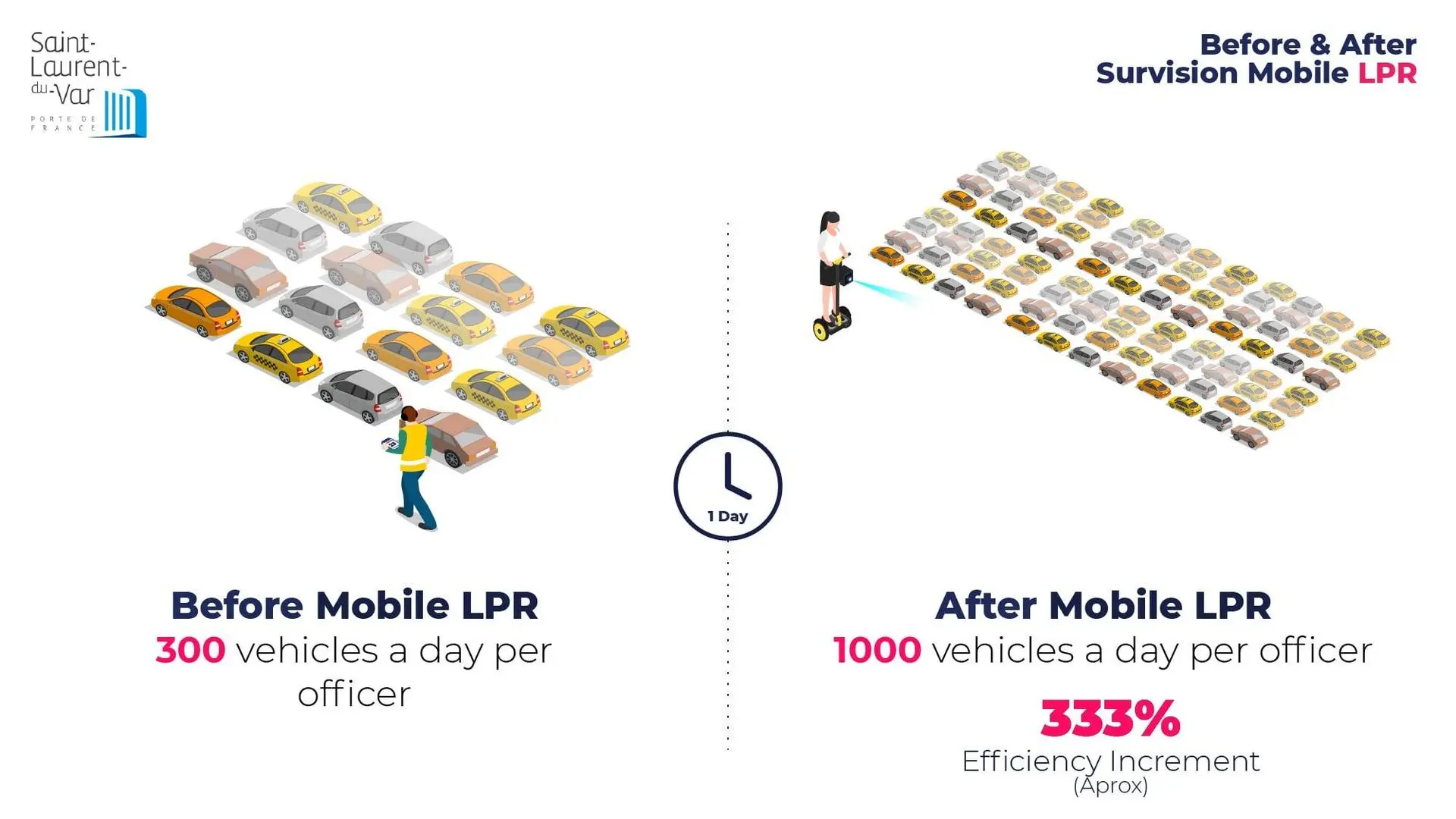
A single parking control agent equipped with a Mobile LPR unit could accurately check up to 1000 vehicles a day, much more than the 300 that could be done by foot.
Harry Reid Airport: Extreme optimization from a simple solution
In 2022, at Las Vegas, Harry Reid International Airport, each evening, a comprehensive license plate inventory was conducted for security purposes and to monitor the overnight locations of vehicles. A team of 15 officers utilized handheld devices to manually record the license plate information.
Upon the integration of our fixed License Plate Recognition (LPR) cameras, they sought the need of a new inventory solution. Thanks to our previous experience and counting with our favorite small camera, we at Survision presented a simplified approach that only required the camera, cloud application, power infrastructure, and data connectivity.
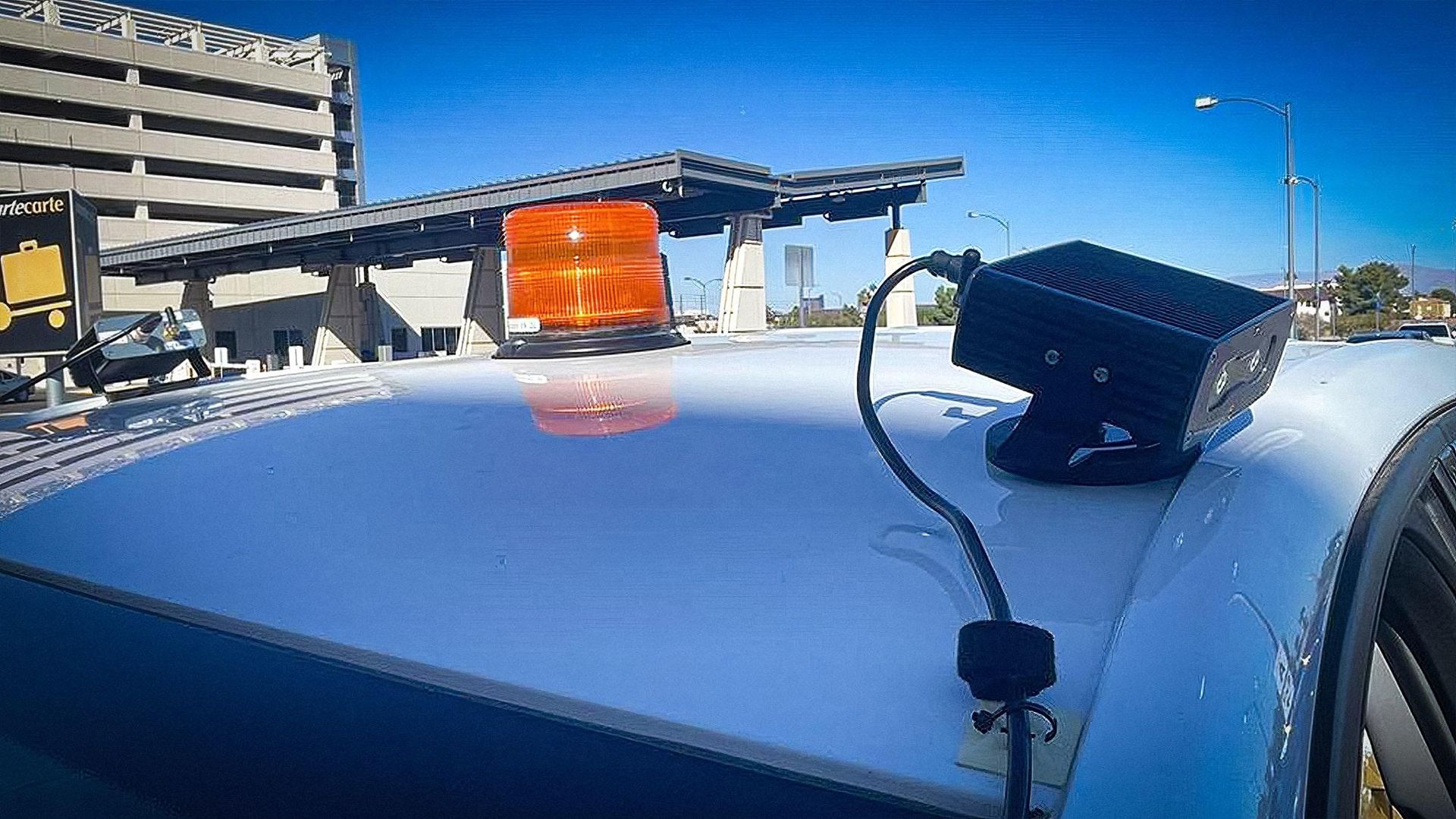
This efficient and cost-effective solution enabled the reassignment of staff to more crucial responsibilities, thereby enhancing their operational efficiency and providing a more comfortable experience for inventory officers.
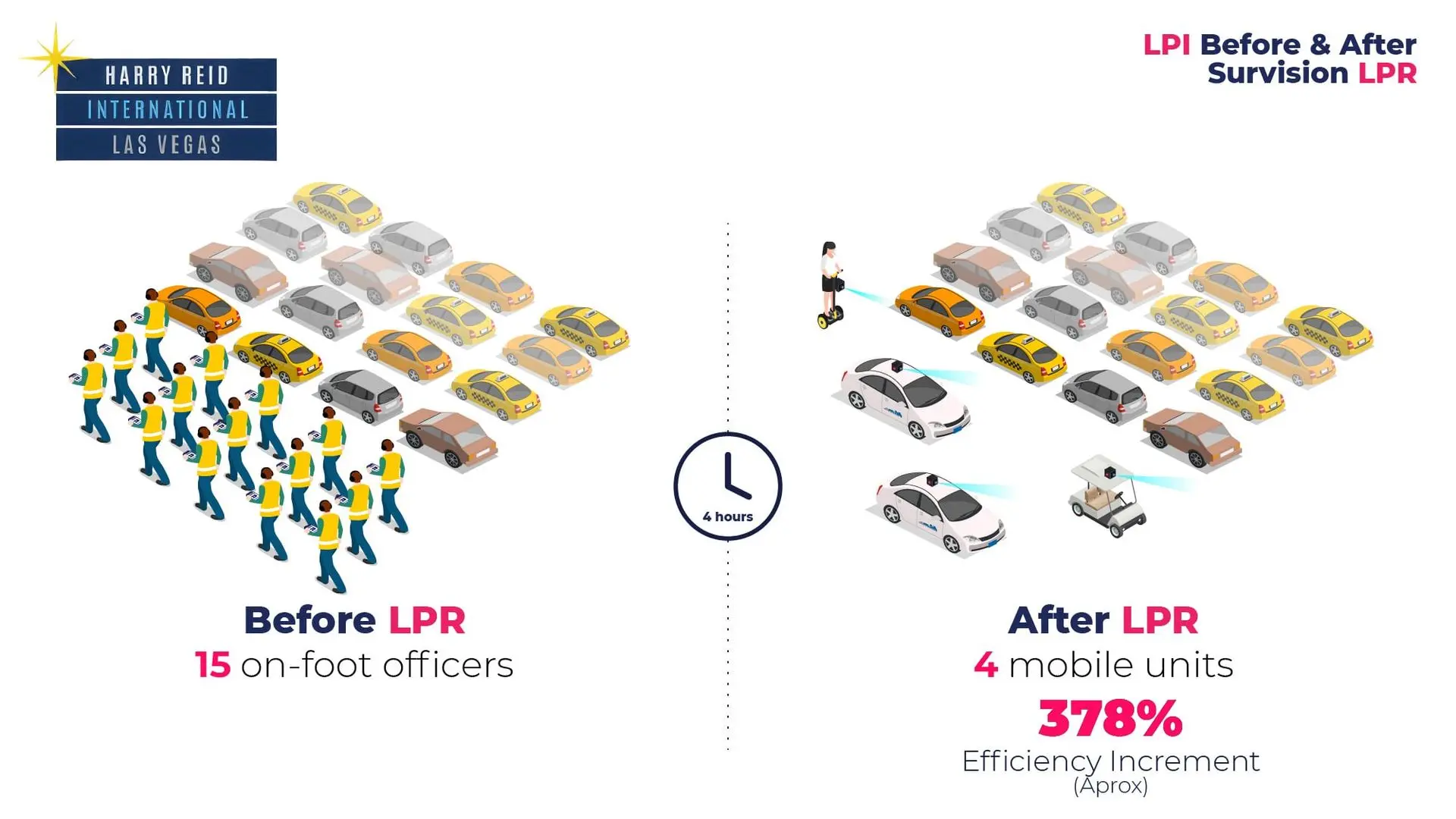
Harry Reid Las Vegas International Airport experienced a huge effectivity increase on LPI operations since Mobile LPR Implementation
Charlotte Douglas Airport
After several difficulties, the previous LPR system was diagnosed as unreliable, so they disabled it. The airport had to return to traditional access systems and manual LPI procedures. Still, the need for a faster and more reliable method was an urgent matter due to the increasing traffic and the related costs.
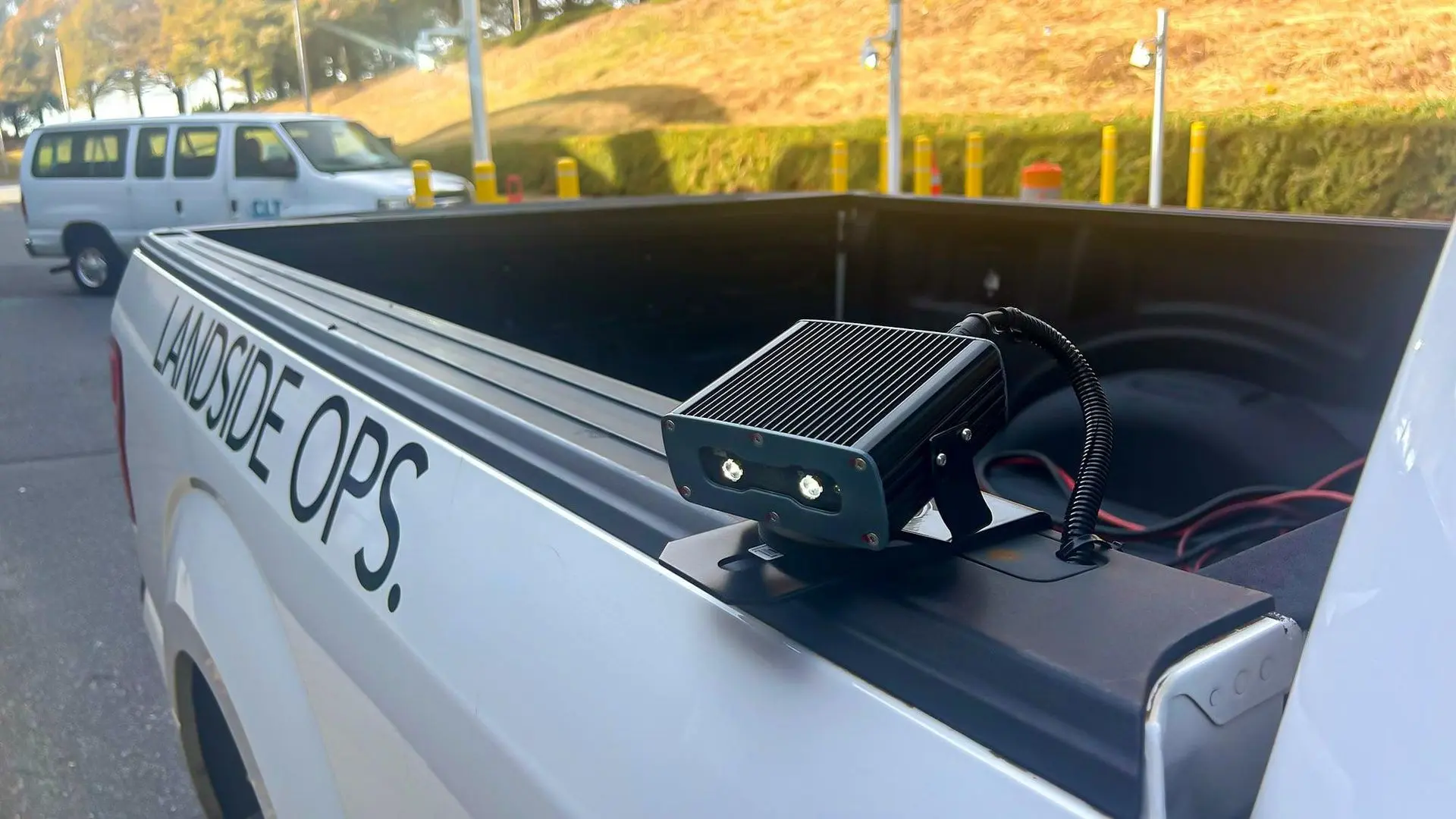
Designa chose Survision for the conditioning of two mobile LPR vehicles with 4 Picopak LPR Cameras, used in conjunction with fixed cameras and LPI Monitor cloud-based solution to perform License Plate Inventory procedures. Nowadays, the new LPI system keeps an up-to-date inventory of all vehicles in the airport, recording and calculating the time of entry, exit and status (in or out).
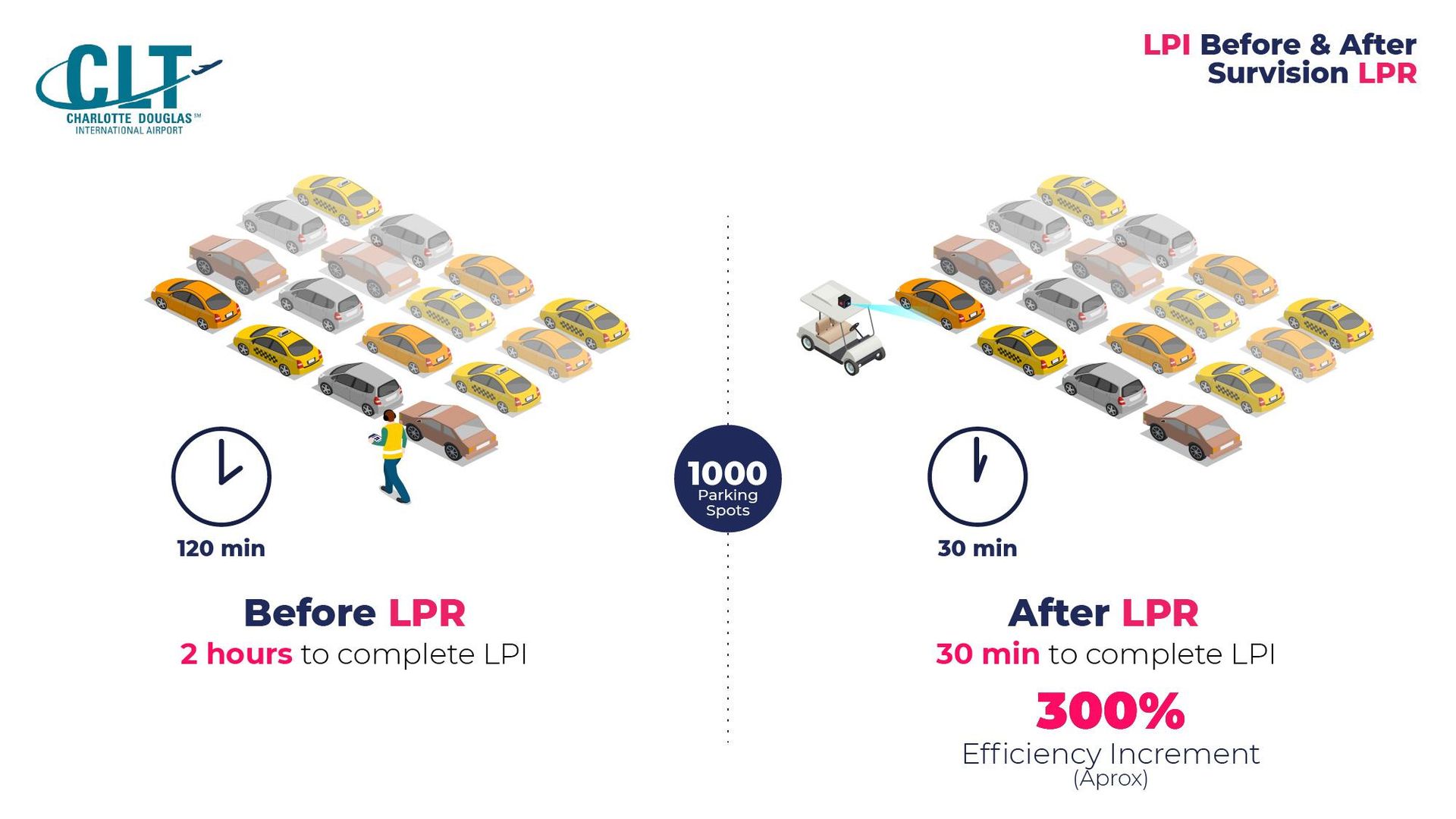
Charlotte-Douglas International Airport also experienced a huge effectivity increase on LPI operations
Mobile LPR today
As you can see, many of these challenges and the following success resides on the LPR Camera; it is not luck but a great deal of effort and research that gave us Picopak, a fast, serverless and triggerless LPR camera, versatile enough to successfully read plates on the go, at high accuracy, which makes it perfect for LPI and parking enforcement operations.
We are now taking our deep experience-based knowledge of the LPR field to the next level: from LPR hardware providers to LPR solutions developers, with our two new products, specific for every field:

Platenforce
Mobile LPR Enforcement Solution based on Picopak
LPI to Go
License Plate Inventory (LPI) Solution based on Picopak,
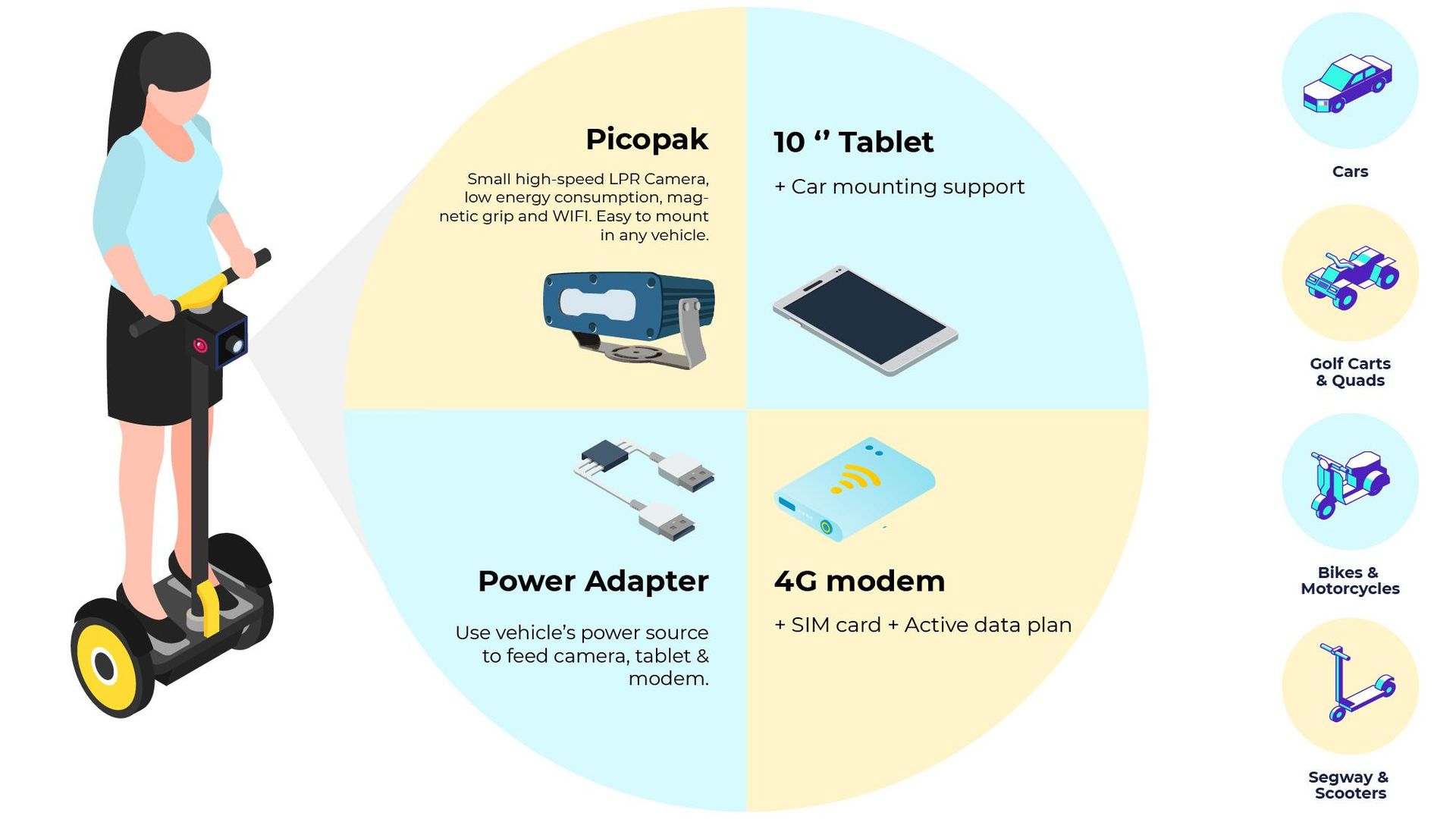
These new solutions are hardware/software bundles that rely on Picopak, combined with a specific, ad-hoc, self-developed app for each case, working on a tablet (also provided).
The set is lightweight and standalone, so it can be mounted in any vehicle (from bikes to golf carts) and moved anytime to another vehicle.
One of the main features of these solutions is 4G connectivity, which makes it capable of transmitting its already LPR-processed digital data to the cloud in real-time, making any other piece of hardware unnecessary, redefining the words “versatile” and “adaptable.”
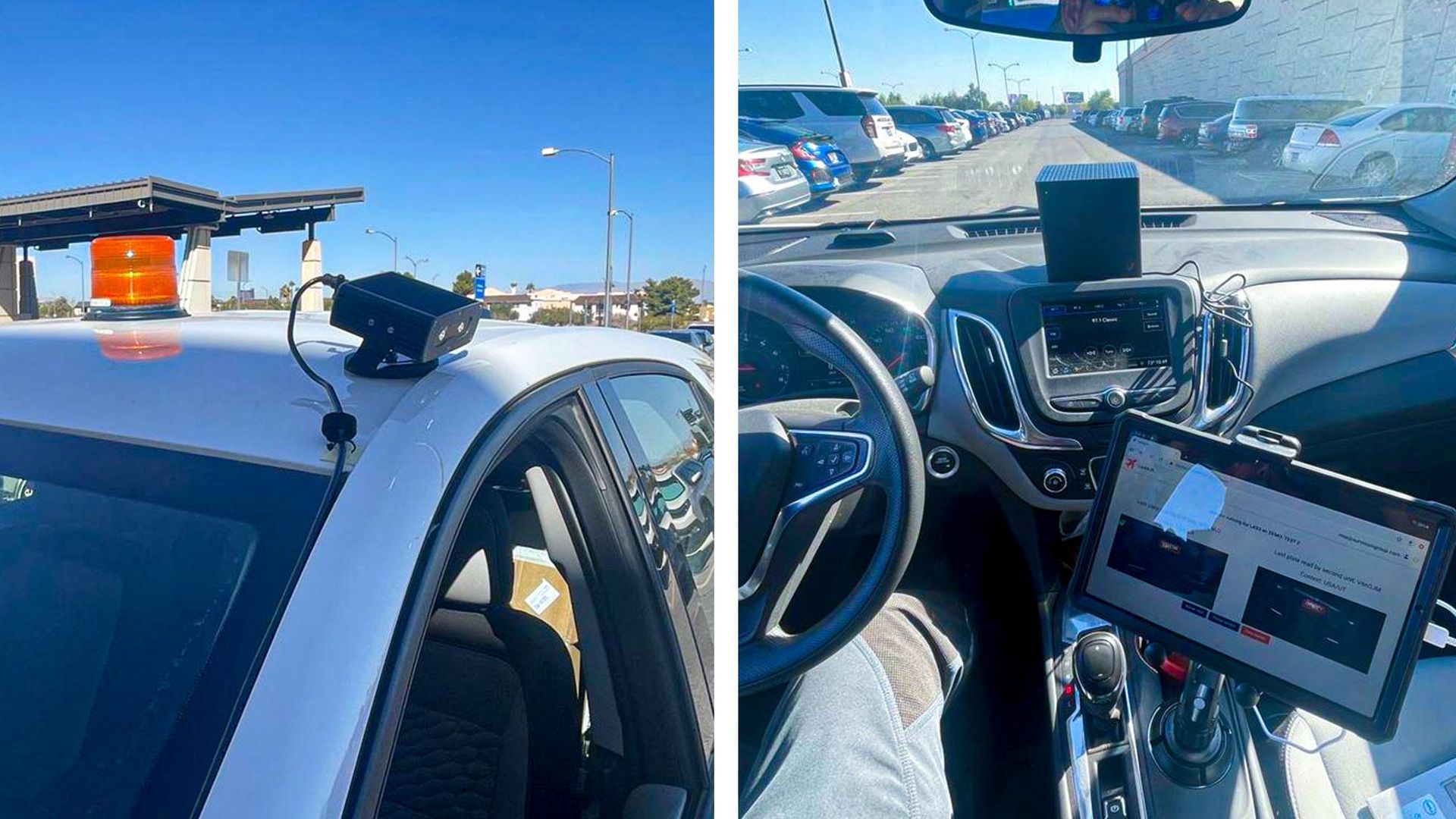
Survision LPI to GO and Platenforce are what we think “the state of the art of Mobile LPR should be”: Light, adaptable, precise, fast ... and connected!